

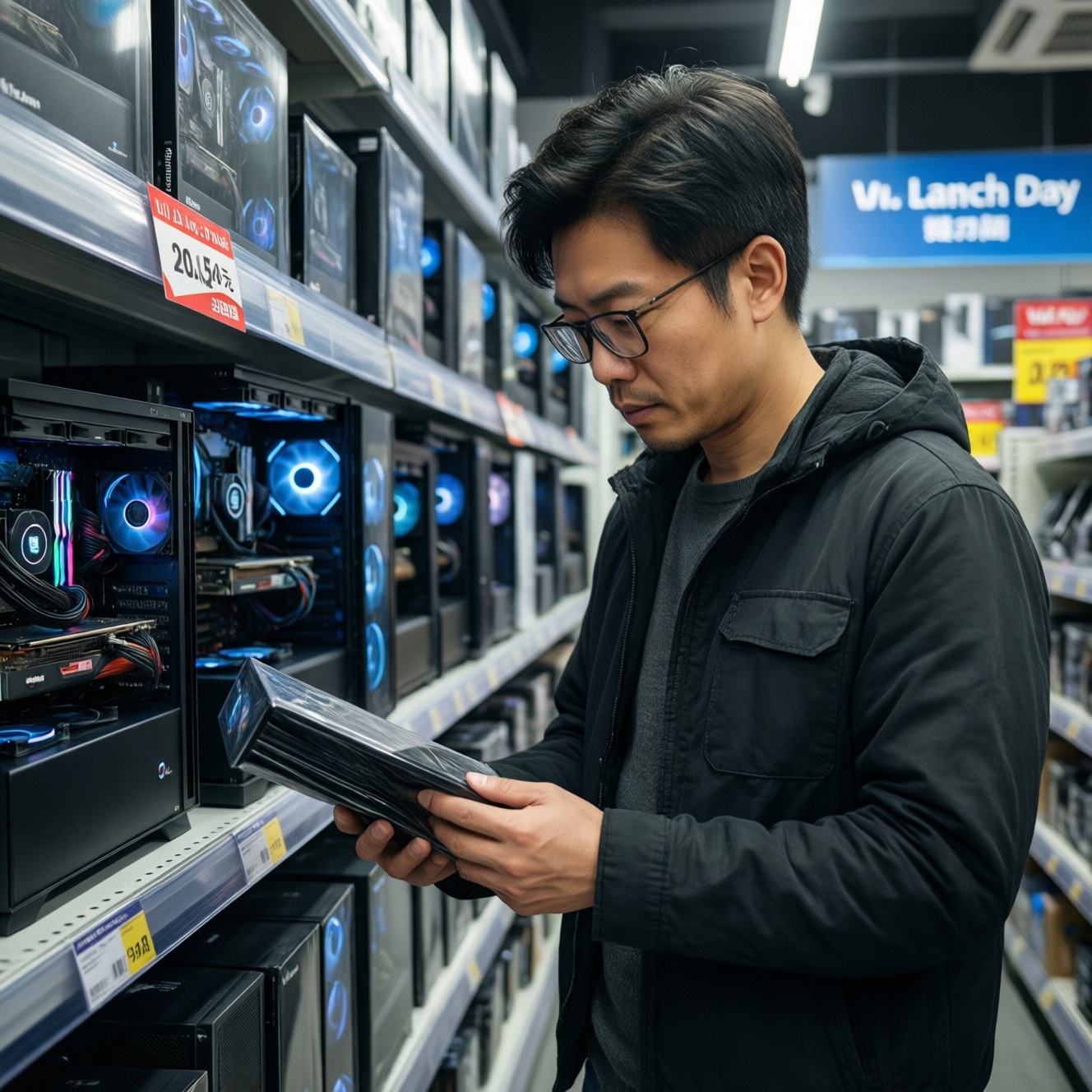
Buying hardware on launch day is worth it when you need the performance immediately, can tolerate early BIOS/driver churn, and the first batch price is close to your target. Waiting is usually better when your workload is flexible and you want stronger value-per-baht through discounts, bundles, and more stable stock. The best choice depends on your persona and upgrade urgency.
Core conclusions on when to buy hardware
- Buy at launch when the cost of waiting is higher than the potential savings (deadlines, competitive gaming seasons, business rollout dates).
- Wait when you can define a clear "value trigger" (a price you accept, or a bundle you actually need).
- For GPUs and CPUs, "timing" is often more about stock stability and platform maturity than raw MSRP.
- Laptops benefit disproportionately from waiting for bundle-heavy promos, but only if the model you want is likely to remain available.
- Early buyers should plan for higher volatility: return windows, firmware updates, and possible part revisions.
- Upgraders get the best overall economics by synchronizing the new purchase with selling the old hardware while demand is still healthy.
Immediate launch purchase: benefits, risks, and ideal buyers
Use these criteria to decide whether ซื้อฮาร์ดแวร์วันเปิดตัวคุ้มไหม for your situation:
- Urgency of workload: Are you blocked today (render times, compile times, client deliverables) or merely "want faster"?
- Risk tolerance: Can you handle early driver/BIOS issues, rapid firmware updates, and occasional incompatibilities?
- Price discipline: Will you refuse inflated street prices and walk away if stock is scalped?
- Platform readiness: New CPU platforms may need mature BIOS/memory QVL lists; new GPUs may need driver fixes for specific games.
- Return and warranty convenience in Thailand: How easy is it to return/claim warranty through the retailer vs distributor?
- Opportunity cost: If you wait, what do you lose (billable hours, tournament performance, business deployment timelines)?
- Bundle relevance: Do you actually use bundled games/software, or are they just marketing noise?
- Resale plan: Can you sell your current part quickly to offset the new purchase while it still has value?
Waiting for price drops: typical depreciation curves by component
When people ask ราคาฮาร์ดแวร์ลดช่วงไหน, the practical answer is: not on a fixed calendar you can rely on, but around stock normalization, competing launches, and retailer promo cycles. If you're deciding ซื้อการ์ดจอช่วงไหนดี, ซื้อซีพียูช่วงไหนดี, or ซื้อโน้ตบุ๊กรอราคาลดกี่เดือน, pick a "wait strategy" that matches your tolerance for delay and substitution.
| Option | Best for | Pros | Cons | When to choose |
|---|---|---|---|---|
| Buy on launch day (Day 0-early stock) | Creator with deadlines; gamer chasing immediate FPS; IT buyer with fixed rollout date | Instant access to peak performance; longest ownership window; early availability of high-end SKUs | Street price volatility; immature BIOS/drivers; limited stock and fewer bundle choices | When you have a hard deadline and can buy at a fair, non-inflated price |
| Wait for stable stock (post-launch normalization) | Most intermediate buyers; upgrader optimizing value without waiting "forever" | More models in market; clearer benchmarks; fewer early adopter issues | You may miss limited launch bundles; top SKUs can remain scarce | When you want the new generation but can delay until pricing and availability look rational |
| Buy during retailer promotion windows (bundles/coupons) | Laptop shoppers; budget gamers; office buyers purchasing multiple units | Best chance of meaningful total value (bundle, cashback, accessories); easier to compare offers | Exact model/CPU-GPU pairing may sell out; promo terms can be restrictive | When your priority is total package value, not a specific SKU at any cost |
| Buy previous generation after new launch | Value-focused gamer; IT buyer standardizing fleets; upgrader on mature platforms | Mature drivers/firmware; predictable performance; often strong price-to-performance | Shorter remaining lifecycle; weaker resale later; may lack new features (encoders, AI blocks) | When you prefer stability and can accept "last gen" as long as it meets targets |
| Buy used/refurb (with verification) | Upgrader who can test parts; secondary PC builds; emergency replacements | Lowest entry cost; good for stopgap upgrades | Higher risk (mining GPUs, hidden defects); warranty transfer may be unclear | When you can inspect/test, confirm warranty, and price is attractive versus new |
| Buy prebuilt or full-platform bundle (CPU+board+RAM / laptop bundle) | IT buyer; creator needing a ready-to-work system; gamer who wants minimal tuning | Lower compatibility risk; one receipt/warranty path; sometimes better overall deal than parts | Less component choice; may include weak PSU/cooling; harder future upgrades | When you value deployment speed and predictability more than component-by-component optimization |
Performance-per-dollar analysis across launch vs delayed buys
Use scenario rules tied to personas to avoid overthinking:
- If you are a competitive gamer and the new GPU materially improves your target resolution/refresh (and you can buy near your acceptable price), buy now; if you're only chasing marginal gains, wait for stable stock and reassess with real game benchmarks.
- If you are a creator (video/3D/AI) and your current system is costing you billable time, buy at launch or near-launch; otherwise wait until productivity apps confirm stable drivers and your preferred codec/accelerator behaves correctly.
- If you are an IT buyer purchasing multiple units, avoid Day 0; choose stable stock or bundles so you can standardize BIOS versions, drivers, and warranty handling for Thailand-based support.
- If you are an upgrader on a budget, set a value trigger (a maximum price or a must-have bundle) and wait until it happens; if it never happens, pivot to previous generation or used/refurb with testing.
- If your question is "ซื้อการ์ดจอช่วงไหนดี", prioritize timing around availability and sane pricing rather than chasing a perfect date; performance-per-baht improves most when you avoid inflated street prices and buy when you can compare multiple SKUs.
Availability, bundles and early-adopter exclusives that affect value
- Define your non-negotiables: target performance, VRAM/RAM capacity, ports, power limits, form factor.
- Set a "walk-away" price: a ceiling you won't exceed even if stock is scarce.
- Check stock breadth: if only 1-2 models exist, you're paying a scarcity tax; wait for more options.
- Validate bundle value: only count bundles you would buy anyway (games you play, software you need, extended warranty you trust).
- Look for platform signals: BIOS updates, memory compatibility notes, and driver release cadence for your main apps/games.
- Plan the exit: decide whether to sell your old part before or after buying, and prepare proof of condition (photos, stress test logs).
- Choose the simplest warranty path: retailer vs distributor handling in Thailand, and keep invoices and serial numbers organized.
Warranty, firmware support and long-term ownership considerations

- Buying a first-wave motherboard/BIOS ecosystem and assuming memory profiles will "just work" without checking QVL notes.
- Ignoring PSU and cooling requirements, then blaming the GPU/CPU for instability under sustained load.
- Overvaluing launch-day reviews and undervaluing later driver/firmware fixes that change real-world stability.
- Choosing the cheapest model variant without checking VRM quality (boards) or cooler design (GPUs), which affects noise, throttling, and longevity.
- Missing the return window while waiting for "one more update" to fix issues that should have been exchanged immediately.
- Assuming warranty is frictionless: in Thailand, the easiest path depends on the retailer/distributor, documentation, and product category.
- For laptops, focusing only on CPU/GPU and forgetting screen quality, thermals, and serviceability-key to long-term satisfaction.
- Buying used without verifying serials, remaining warranty terms, and stress testing (especially for GPUs with unknown prior workloads).
Resale value, trade-in timing and when to sell old hardware
Launch-day buying tends to suit deadline-driven creators and gamers who can sell their old hardware quickly to offset the cost, while waiting tends to suit value-focused upgraders and IT buyers who benefit from stable stock, clearer reliability signals, and stronger bundle economics. If your current system still sells well, align the sale close to your purchase to reduce total cash outlay without forcing a rushed decision.
Answers to common timing and purchase dilemmas
ซื้อฮาร์ดแวร์วันเปิดตัวคุ้มไหม if I only game casually?
Usually not, unless the new part fixes a real bottleneck (stuttering, VRAM limits, unplayable settings). Casual play typically benefits more from waiting for stable stock and better-priced alternatives.
ซื้อการ์ดจอช่วงไหนดี for the best real-world value?

Buy when multiple models are broadly available and pricing is not inflated by scarcity. If only a few SKUs are in stock, you're likely paying for availability rather than performance.
ซื้อซีพียูช่วงไหนดี if I'm also changing motherboard and RAM?
Consider waiting until the platform's BIOS and memory compatibility are well documented by vendors and users. For full-platform changes, stability often matters more than being first.
ซื้อโน้ตบุ๊กรอราคาลดกี่เดือน should I wait for a fixed period?
A fixed number of months is less reliable than a trigger: the exact model you want at a price you accept, with a warranty you trust. If the model is likely to disappear, prioritize availability over waiting.
ราคาฮาร์ดแวร์ลดช่วงไหน in Thailand-any predictable pattern?

Discounts are most predictable around retailer campaigns and when stock is plentiful, not strictly around launch timelines. Treat "calendar timing" as secondary to stock depth and offer quality.
Should I sell my old GPU/CPU before buying the new one?
If you can tolerate downtime, selling first reduces cash tied up and forces price discipline. If you need a working PC daily, buy first-then sell quickly while demand for your old part is still healthy.