
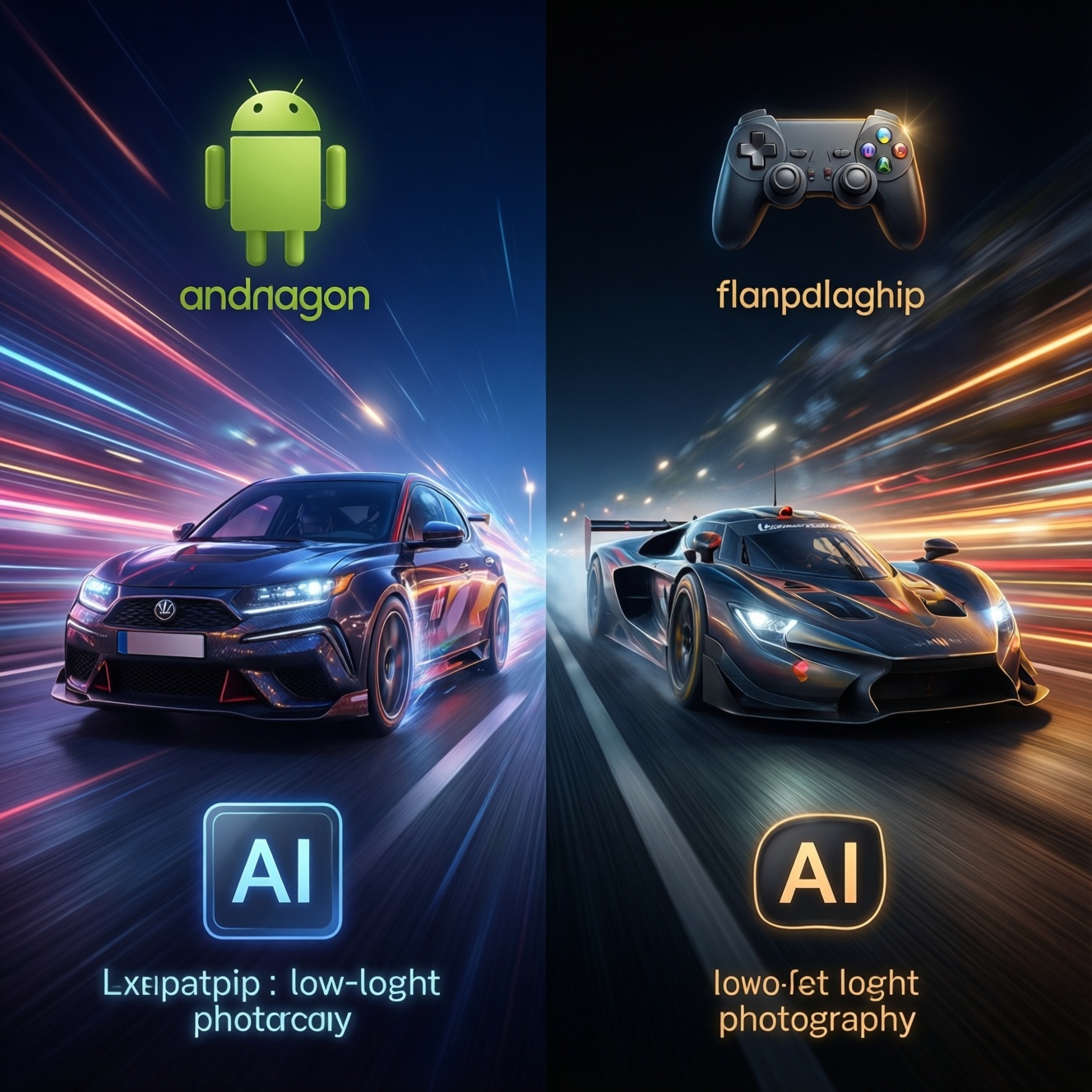
In real-world use, Apple A‑series iPhones often feel faster and more consistent at sustained performance and on-device AI workflows, while latest Snapdragon flagships can match or exceed peak GPU bursts and offer wider device/price choices. Your best pick depends on what you do most: long gaming sessions, low-light photo consistency, or AI features inside Android apps.
Overview: Real-world Performance Snapshot
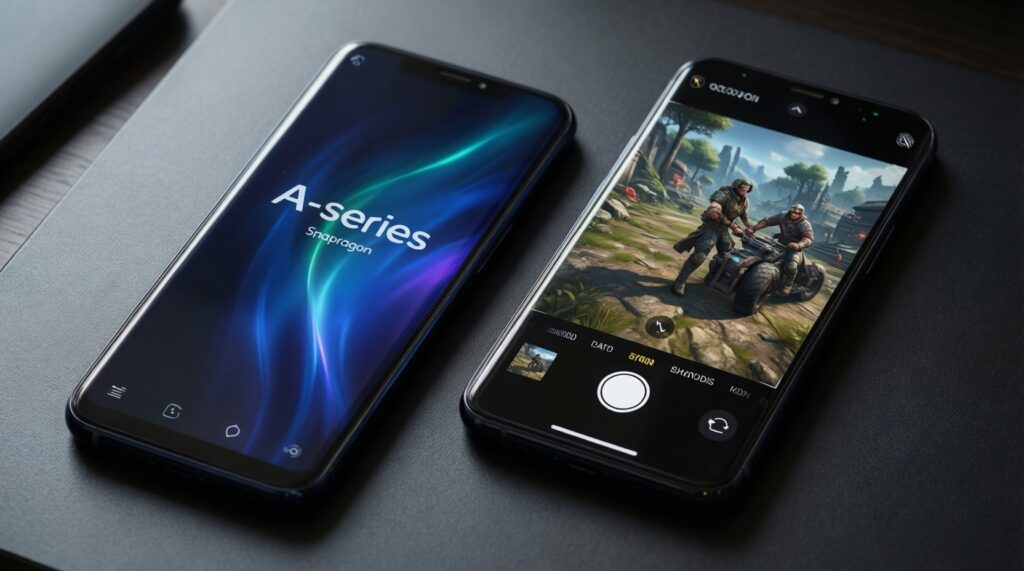
- If you want predictable speed over hours (heat, throttling, battery), A‑series tends to be easier to "just trust" across apps and camera pipelines.
- If you want the widest range of gaming phones and price tiers, Snapdragon gives more models, cooling designs, and screen/battery combinations.
- For camera consistency, the whole system matters (sensor + tuning + HDR pipeline), not only the ISP; iPhone tuning is usually uniform across regions.
- On-device AI is about app support and frameworks as much as raw NPU; Android options vary by brand, while iOS is more standardized.
- Budget-first shoppers usually get better "per-baht" options with Snapdragon, because there are more midrange SKUs and frequent promotions in Thailand.
CPU & GPU: Benchmarks, Efficiency and Sustained Performance
Use these criteria to judge real performance (not just peak benchmark screenshots), especially for the question "ชิป A-series vs Snapdragon รุ่นล่าสุด อันไหนแรงกว่า" in everyday work.
- Sustained load behavior: how quickly clocks drop under heat (gaming, 4K video, heavy AI).
- Device cooling design: vapor chamber size, graphite layers, chassis materials; this can outweigh chip differences.
- CPU scheduling and app optimization: iOS uniformity vs Android variance by vendor skin and background policies.
- GPU driver maturity: especially for new game engines, high refresh rates, and stability under long sessions.
- Memory system: RAM capacity, bandwidth, and storage speed affect app switching, photo processing, and large games.
- Power efficiency at medium loads: scrolling, camera preview, navigation, and social apps are "all-day" workloads.
- Thermal comfort: hot phones throttle sooner and are harder to game on; comfort is part of performance.
- Update cadence: OS updates can change performance/thermals; consider the brand's history in Thailand.
Gaming in Practice: Frame Rates, Thermal Behavior and Battery Impact
Test conditions to keep comparisons fair: same game version, same graphics preset, fixed screen refresh, similar brightness, same network state (Wi‑Fi or 5G), phone not charging, and start each run from a cool device. Without this, "มือถือ Snapdragon รุ่นล่าสุด เล่นเกมลื่น รุ่นไหนดี" becomes a brand debate rather than a measurable choice.
| Option | Who it suits | Pros | Cons | When to choose |
|---|---|---|---|---|
| Latest iPhone with A‑series (current generation) | Players who want stable performance and minimal tweaking | Consistent frame pacing; strong sustained efficiency; predictable game compatibility on iOS | Fewer device/price configurations; limited cooling variation; less flexibility in emulation/modding | Choose if you want "set-and-forget" gaming plus strong video/camera reliability |
| Snapdragon flagship in a "gaming phone" chassis | Competitive gamers who play long sessions and care about thermals | Best chance of sustained performance due to aggressive cooling; gaming tools (bypass charging, performance modes) | Heavier/bulkier; camera often secondary; performance modes can increase battery drain and heat | Choose if your priority is the smoothest long sessions on Android and you accept camera trade-offs |
| Snapdragon flagship in a camera-centric Android phone | People who want Android flexibility plus high-end imaging | Strong peak GPU/CPU; often great screens; competitive camera stacks when tuning is good | Thermals depend on brand design; camera results vary by firmware and region | Choose if you want one device for gaming + camera, and you're willing to pick a well-reviewed model |
| Snapdragon upper-midrange (latest generation) | Budget-first buyers who still want smooth gaming | Best value; many models in Thailand; good everyday efficiency | Less headroom for max graphics; heavier throttling in thin phones; weaker ISP/NPU than flagships | Choose if price matters most and you play at balanced settings rather than max |
| Last-gen flagship iPhone (previous A‑series) | People who want iOS performance but not the newest price | Still very fast in real apps; strong camera pipeline; long OS support pattern | Battery health and storage tier matter; may miss newest AI/camera features | Choose if you want the iPhone experience at a lower cost and you can verify battery condition |
Camera Output: ISP Capabilities, Computational Tricks and Low-light Tests
For "มือถือชิปแรงสำหรับเกมและถ่ายรูป ปี 2026", treat the chip as only one part of the camera system. Use scenario-based selection, and consider both budget and premium paths.
- If you shoot lots of moving subjects (kids, pets, street), then prioritize faster, more consistent capture timing and HDR merging (often easier with iPhone A‑series), especially in mixed lighting.
- If you want the best low-light consistency without manual effort, then pick the ecosystem with the most reliable auto exposure + noise handling in reviews for your region; premium iPhones are a safe baseline, while premium Snapdragon camera phones can match it when tuning is excellent.
- If you care about zoom versatility, then choose a phone based on its telephoto hardware and processing pipeline; many Snapdragon flagships offer more varied zoom hardware options than iPhones at the same time.
- If you record lots of video for work/social, then pick the device that gives stable focus, exposure transitions, and audio handling in your common conditions; iPhone A‑series is often the "least surprise" option.
- If you're budget-first and mainly post to social, then choose an upper-midrange Snapdragon phone with strong main sensor + proven processing, and spend saved budget on storage (more space for photos/videos) rather than chasing peak chip tiers.
- If you want a premium Android camera experience, then choose a Snapdragon flagship with a track record of frequent camera updates; the best results usually come after firmware maturation.
On-device AI: Inference Speed, Supported Models and Everyday Use
This quick checklist helps if you're searching "มือถือชิปแรง AI ดี Snapdragon รุ่นล่าสุด แนะนำ" and deciding between iPhone A‑series vs Snapdragon.
- List your AI tasks: photo cleanup, live translation, voice typing, note summarization, generative stickers/wallpapers, offline assistants.
- Check where the feature runs: on-device vs cloud; if it's cloud, the chip matters less than network and subscription limits.
- Verify app support in Thailand: the same model can expose different AI features depending on language packs and regional availability.
- Prefer consistent frameworks: iOS tends to be uniform across devices; Android AI performance/features can vary by brand implementation even on the same Snapdragon tier.
- Look for sustained AI performance: long photo batches or offline transcription can heat the device; prioritize phones known for stable thermals.
- Choose storage and RAM wisely: for large offline models and heavy multitasking, capacity often improves real usability more than small chip tier jumps.
Connectivity & Multimedia: 5G/Wi‑Fi, Latency and Streaming Experience
Common buying mistakes that lead to disappointment-especially when comparing "iPhone A-series vs Snapdragon ซื้อรุ่นไหนดี" for gaming, streaming, and daily use in Thailand:
- Ignoring carrier bands and CA combos: a "flagship modem" won't help if your model/region variant doesn't match local networks well.
- Assuming peak 5G speed equals low latency: ping stability matters more for gaming; congestion and routing dominate.
- Overvaluing Wi‑Fi version labels: router quality, channel congestion, and antenna design can matter more than Wi‑Fi 6/7 branding.
- Forgetting thermal impact on connectivity: hot phones can reduce performance and stability; long hotspot use is a stress test.
- Choosing the highest refresh display without considering GPU headroom: a 120-144Hz panel doesn't guarantee smoothness in heavy games.
- Neglecting codec support and Bluetooth stability: earbuds latency/quality can vary widely by phone brand tuning.
- Assuming all streaming looks the same: DRM tiers, HDR handling, and app optimization can change perceived quality.
Value-for-money Analysis: Best Budget Choices and Upgrade Trade-offs

Budget-first: pick an upper-midrange or discounted flagship Snapdragon phone if your goal is the best overall value and many choices for "มือถือ Snapdragon รุ่นล่าสุด เล่นเกมลื่น รุ่นไหนดี"; pick a last-gen flagship iPhone if you want iOS smoothness and consistent camera/video without paying top tier. Premium: choose the newest A‑series iPhone for predictable sustained performance and AI uniformity, or a well-reviewed Snapdragon flagship with strong cooling if you prioritize long gaming sessions and Android flexibility.
Common Reader Concerns and Quick Clarifications
Does A‑series always beat the latest Snapdragon in real use?
No-results depend on the phone's cooling, firmware, and your workload. A‑series often feels more consistent under sustained loads, while Snapdragon flagships can be extremely fast in bursty GPU-heavy tasks.
Which is safer if I don't want to tweak settings for games?
An iPhone with A‑series is usually simpler: fewer performance modes and more consistent behavior across apps. On Snapdragon phones, you can get great results, but you may need to pick the right model and settings.
For camera, should I choose by chip or by phone model?
Choose by phone model and its camera system (sensors, lenses, tuning, update history). The ISP matters, but tuning and hardware decisions dominate the final look.
Is on-device AI mainly about the NPU?
Not only. App support, OS frameworks, and whether a feature runs on-device or in the cloud often matter more than raw NPU capability.
What's the most cost-effective upgrade path in Thailand?
Discounted last-gen flagships (either iPhone or Snapdragon) usually offer the best real-world performance per baht. Prioritize storage, battery condition, and warranty over small chip tier jumps.
How do I avoid thermal throttling when gaming?
Pick a model known for strong cooling, keep brightness reasonable, avoid charging while playing, and use balanced graphics settings. A good chassis design can matter as much as the chip.
Which should I buy if I need both gaming and low-light photos?
Choose a camera-centric Snapdragon flagship if you want Android flexibility and a strong multi-camera setup, but verify low-light consistency in reviews. Choose an A‑series iPhone if you want reliable low-light behavior with minimal tuning.