


Both next-gen Snapdragon and Dimensity chips are still largely rumor-driven, so the practical "best" choice depends on your priority: steady performance under heat, or lower power draw for longer battery. Use sustained workload behavior, modem efficiency, and your phone's cooling design to decide-not early peak benchmarks or leaked clocks.
Snapshot: Performance vs Power in the Next Snapdragon and Dimensity
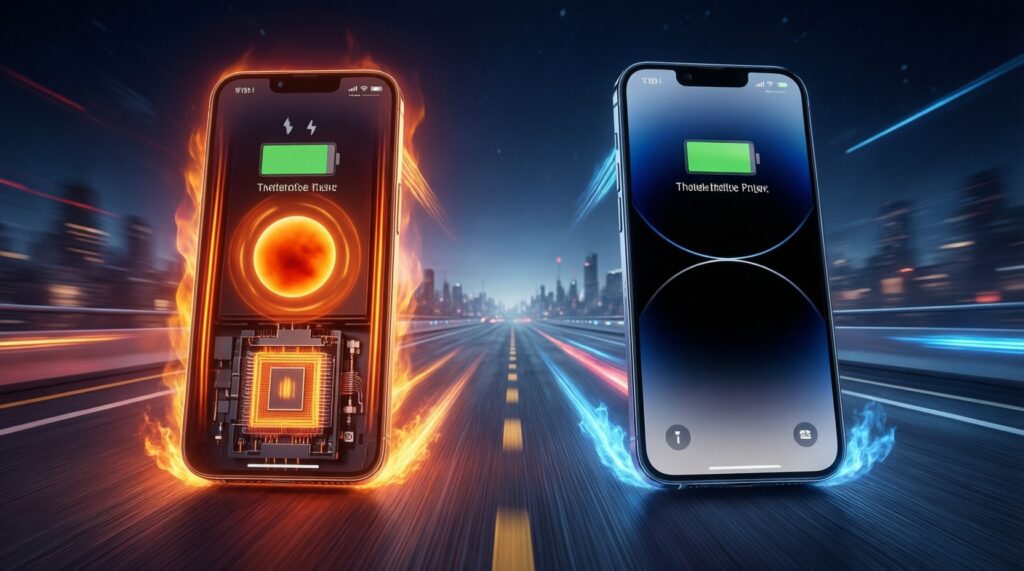
- Expect a tighter race: peak speed may look similar, but sustained performance can diverge due to thermal tuning and OEM cooling.
- Battery results often depend more on modem/RF efficiency and screen than on CPU peak, especially in budget and mid-range phones.
- Early "ผลทดสอบ Benchmark Snapdragon รุ่นใหม่" leaks can be useful only when repeated across devices and tracked for throttling.
- Pricing signals are unclear: "ราคา Snapdragon รุ่นใหม่ ล่าสุด" and "ราคา Dimensity รุ่นใหม่ ล่าสุด" are typically set by phone SKUs and promos, not chip alone.
- For value buyers in TH, Dimensity-based models often compete aggressively on features-per-baht, while Snapdragon models often lean on ISP/camera and ecosystem tuning.
- Don't anchor to launch rumors like "มือถือชิป Snapdragon รุ่นใหม่ เปิดตัวเมื่อไหร่"; real-world availability is tied to OEM release cycles.
Architectural shifts: nodes, core layouts and what they mean for efficiency
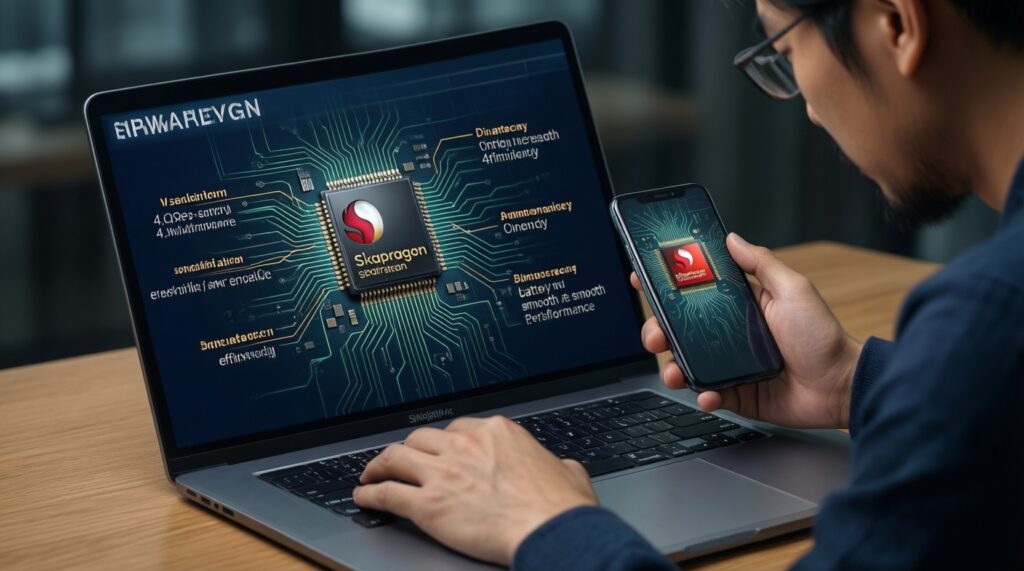
When you read leaks about "next Snapdragon vs next Dimensity," evaluate them with these selection criteria. They are more predictive of battery and day-to-day smoothness than a single headline score:
- CPU core mix (big/mid/little balance): Favor designs that keep routine tasks on efficient cores rather than spiking big cores.
- Boost behavior and DVFS curve: How aggressively clocks ramp up and how quickly they drop after short bursts.
- Cache strategy (system cache/L3 sizing approach): More effective caching can reduce memory power and improve sustained smoothness.
- Memory controller efficiency: LPDDR generation support matters, but the controller's power management matters more for standby and scrolling workloads.
- GPU frequency policy: A GPU that holds moderate clocks efficiently often beats a GPU that peaks high then throttles.
- NPU/AI offload maturity: If on-device AI features are common in your apps, efficient NPU execution can reduce CPU/GPU wakeups.
- ISP and video blocks: Efficient image/video pipelines reduce heat and battery drain during camera and streaming, even on mid-range phones.
- Thermal design dependency: Some chips look great only with large vapor chambers; cheaper phones may not sustain them.
- Modem integration and RF front-end: In Thailand, real battery life can swing with 5G band usage, signal quality, and modem scheduling.
GPU and NPU comparisons: throughput, power draw and gaming implications
Use this as a decision map rather than a promise of exact performance. Any "เปรียบเทียบ Snapdragon vs Dimensity รุ่นถัดไป" today is partly speculative; treat "rumored" items as placeholders until retail phones ship.
| Variant | Who it fits | Pros | Cons | When to choose |
|---|---|---|---|---|
| Next Snapdragon flagship (rumored) | Power users, creators, heavy camera users, premium buyers | Often strong ISP tuning, broad app/game optimization, mature GPU drivers | Can be less "budget-friendly" once packaged into premium phones; may need good cooling to sustain | If you prioritize stable high FPS gaming, camera consistency, and long-term ROM/kernel support in popular models |
| Next Dimensity flagship (rumored) | Value-focused enthusiasts who still want near-flagship feel | Frequently aggressive features-per-price in TH retail; can be efficient at mid clocks | Optimization varies by OEM and game title; some models throttle depending on chassis | If you want near-flagship responsiveness but plan to shop promotions and compare complete phone configs |
| Next Snapdragon upper-mid (expected tier) | Mid-range buyers who care about stability and cameras | Balanced performance, often good imaging pipeline, typically predictable thermals | Some SKUs may be priced high vs competitors with similar everyday speed | If you want fewer surprises: stable thermals, consistent camera apps, and wide accessory/repair ecosystem |
| Next Dimensity upper-mid (expected tier) | Budget-first buyers who still game and multitask | Strong value pressure on market pricing; efficient for social/video; competitive GPU at moderate settings | Peak gaming FPS may lag a similarly positioned Snapdragon in some titles; OEM tuning matters | If your priority is long battery on a mid-range price and you can accept "High" instead of "Ultra" graphics |
| Current-gen discounted Snapdragon (confirmed retail) | Practical buyers shopping sales now | Known behavior, known thermals, lots of reviews; better risk control than rumors | Less future-proof for AI features; may miss newer modem efficiencies | If "ราคา Snapdragon รุ่นใหม่ ล่าสุด" is unclear and you see a strong promotion on proven models |
| Current-gen discounted Dimensity (confirmed retail) | Budget-first buyers who want maximum spec per baht today | Excellent promotions in TH; solid everyday speed; good battery in many implementations | Variance across OEMs is higher; some devices ship with conservative thermal limits | If "ราคา Dimensity รุ่นใหม่ ล่าสุด" isn't competitive yet, but last-gen phones have big markdowns |
Battery-first benchmarks: expected runtime in budget and mid-range phones
Battery life is where the "best chip" often flips depending on phone design. Use scenario rules that match how you actually use the device, with extra attention to budget vs premium implementations:
- If you're a budget buyer and mostly on LTE/5G with social + video, then prioritize the phone with proven modem efficiency and a conservative performance mode-even if its peak benchmark looks lower.
- If you commute in mixed-signal areas (BTS/MRT, dense malls) and stay on 5G, then pick the model that reviewers note as cooler during data use; RF power can dominate runtime more than CPU.
- If you game 30-60 minutes at a time, then choose the device that holds stable frame pacing (less throttling) rather than the one that spikes higher FPS for the first few minutes.
- If you do lots of camera + short video clips, then favor the chip/phone combo with efficient ISP/video blocks and less heat during recording; this protects both battery and sustained responsiveness.
- If you're considering premium models, then pay for better cooling (vapor chamber, graphite stack) because it turns the same chip into more stable performance and better efficiency under load.
- If your buying window is soon, then treat early "ผลทดสอบ Benchmark Snapdragon รุ่นใหม่" as directional only; prioritize battery tests done on retail firmware.
Sustained performance and thermal limits under real workloads
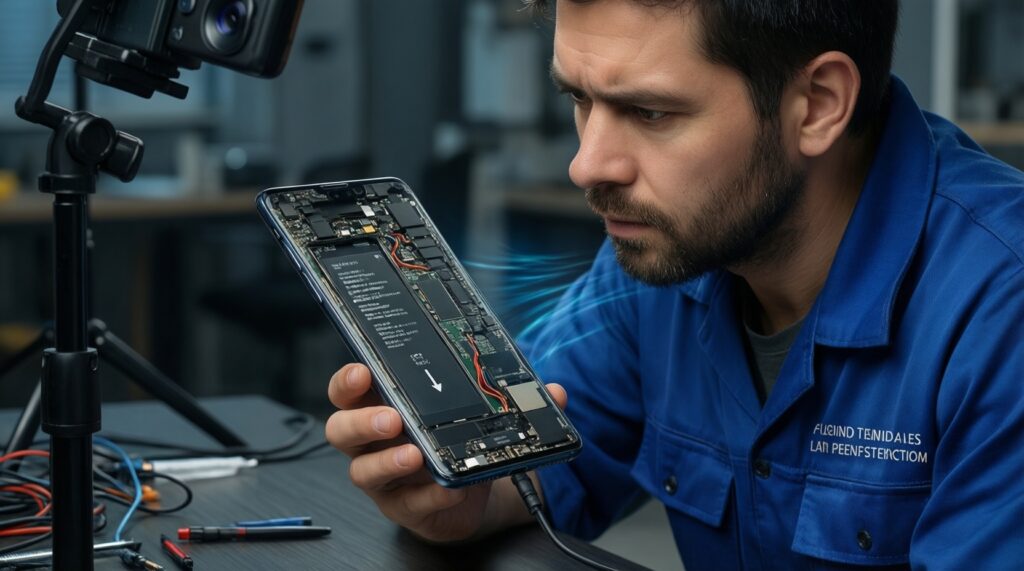
- Define your longest heavy task (gaming session length, 4K recording duration, hotspot time).
- Check if the phone has real cooling hardware (not just marketing terms) and whether the chassis is thin/light.
- Look for sustained tests, not only peak scores: stability, throttling pattern, and skin temperature notes.
- Compare performance modes (Balanced vs Performance) and whether the phone forces aggressive limits on battery.
- Validate modem heat: note if the phone warms during navigation/streaming on 5G-this predicts battery drain in Thailand usage.
- Prefer proven retail behavior if timelines are uncertain: when "มือถือชิป Snapdragon รุ่นใหม่ เปิดตัวเมื่อไหร่" is unclear, current-gen deals may be the better outcome.
- Make the final call on total device value: display efficiency, battery size, and OEM software often outweigh small SoC deltas.
Connectivity and RF: 5G modems, power cost and coverage tradeoffs
- Assuming 5G "on" always means "better": in weak coverage, 5G search/handovers can cost more battery than LTE.
- Ignoring carrier band behavior: your typical areas (home/work) can favor different RF conditions and impact heat.
- Overweighting Wi‑Fi specs: for many users, mobile data is the true battery driver during the day.
- Comparing chips without the same OEM antenna design: modem efficiency is not the only factor; antenna/RF front-end tuning matters.
- Taking launch modem claims as guaranteed: early spec leaks rarely reflect real firmware scheduling and operator settings.
- Buying a "performance" phone with a thin chassis: high peak throughput can turn into throttling and worse efficiency if the device can't dissipate heat.
- Not checking dual-SIM behavior: two active SIMs can increase network management overhead and standby drain.
- Assuming "international ROM" equals identical connectivity: regional firmware differences can affect power and reception behavior.
Market positioning: expected SKUs, pricing tiers and value calculations
For budget-first buyers in Thailand, the best value is often an upper-mid Dimensity phone or a discounted current-gen model when "ราคา Dimensity รุ่นใหม่ ล่าสุด" undercuts similar devices; for buyers prioritizing predictable gaming/camera tuning and broader ecosystem support, a Snapdragon-based phone-especially with strong cooling-tends to be the safer pick even if "ราคา Snapdragon รุ่นใหม่ ล่าสุด" lands higher in equivalent configurations.
Reader queries: concise answers about timelines, claims and testing
Is it safe to decide based on early benchmark leaks?
Use leaks only as a rough direction. A single "ผลทดสอบ Benchmark Snapdragon รุ่นใหม่" screenshot can be influenced by firmware, thermal state, and test settings; wait for repeated results on retail phones.
มือถือชิป Snapdragon รุ่นใหม่ เปิดตัวเมื่อไหร่ in Thailand?
Chip announcements and Thai retail availability are different timelines. The practical date is when multiple OEM models ship locally with stable firmware and carrier profiles.
Why do Snapdragon phones sometimes cost more even with similar specs?
Pricing is driven by the whole device: camera stack, display, build, brand positioning, and software support. That's why "ราคา Snapdragon รุ่นใหม่ ล่าสุด" is not a direct proxy for chip cost.
How should I interpret ราคา Dimensity รุ่นใหม่ ล่าสุด when comparing phones?
Compare the full SKU: RAM/storage, cooling, display, and warranty channel. "ราคา Dimensity รุ่นใหม่ ล่าสุด" often looks attractive, but total value depends on the device implementation.
Which is better for battery: next Snapdragon or next Dimensity?
Either can win depending on modem scheduling, OEM tuning, and thermals. For budget phones, efficiency often comes from conservative tuning and good RF behavior more than from peak CPU design.
What's the most reliable way to compare Snapdragon vs Dimensity รุ่นถัดไป?
Use identical test conditions on retail units: sustained gaming, video recording heat, and mixed network day-use. A meaningful "เปรียบเทียบ Snapdragon vs Dimensity รุ่นถัดไป" includes throttling and battery drain, not just peak scores.
Should I wait for next-gen or buy a discounted current-gen phone?
If you need a phone soon, discounted current-gen models reduce risk because behavior is well-reviewed. Waiting makes sense only if you specifically need upcoming features and can accept uncertain pricing and availability.