
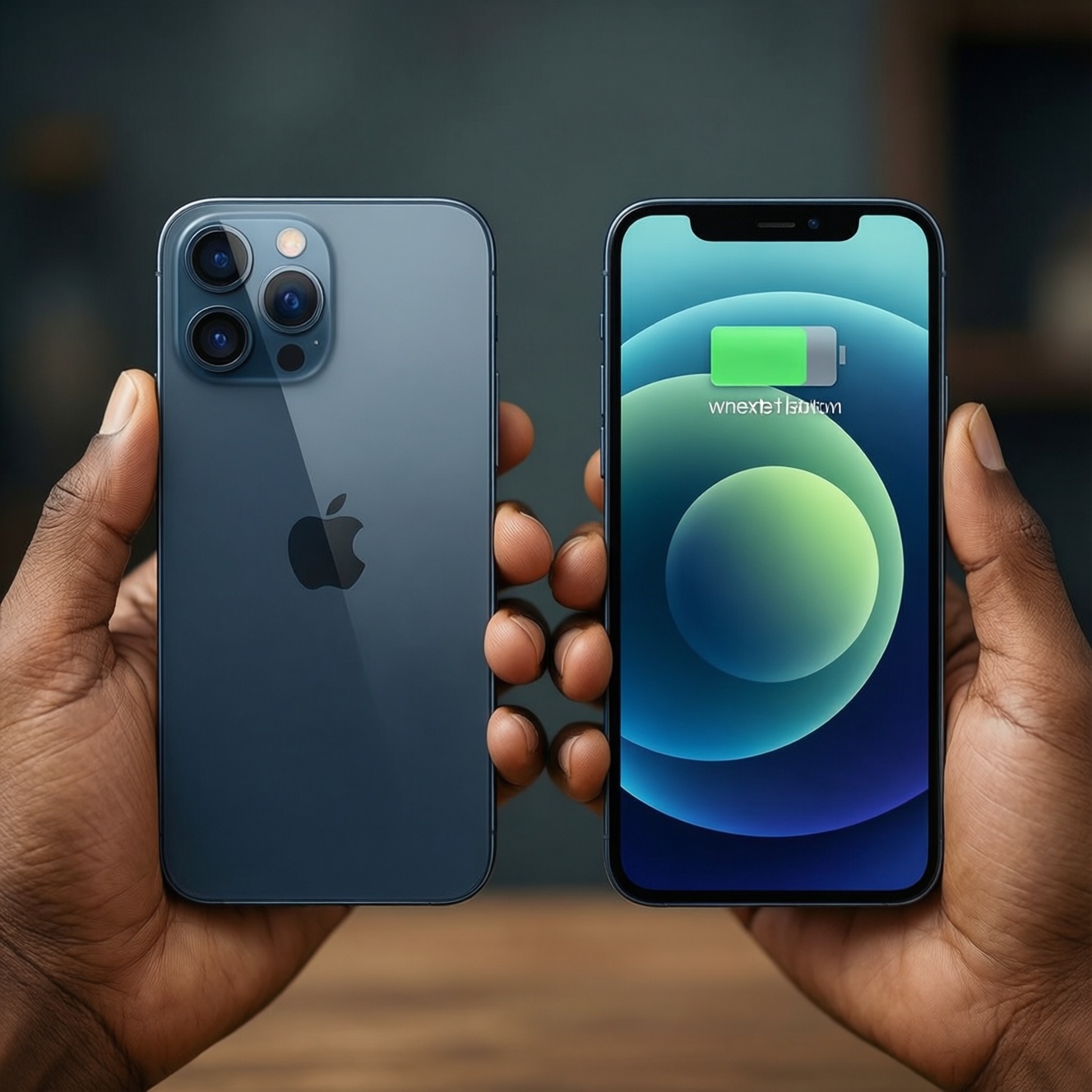
If you're deciding whether to move from a previous iPhone to the newest one, focus on the upgrade's meaningful gains: battery health, camera needs, performance bottlenecks, connectivity, and how long you plan to keep the phone. Most people get better value by choosing last‑gen (discounted) or waiting, unless a specific feature fixes a daily pain.
Concise Upgrade Verdicts
- If your current iPhone feels slow only in heavy apps (editing, gaming, AI features), the newest model is usually the cleanest fix.
- If you want the best balance of modern features and cost, last‑gen is often the safest "ซื้อ iPhone รุ่นไหนดี" answer.
- If your main issue is short runtime, replacing the battery (or buying a refurb with strong battery health) can beat a full upgrade.
- If camera matters mainly for casual social posts, software improvements often narrow the gap; spend for hardware only when you need specific modes.
- If your phone still gets iOS updates and meets your needs, "อัปเกรด iPhone คุ้มไหม" is frequently "not yet"-wait for a bigger jump.
Price-to-Performance: New vs Previous iPhone Models
Use these criteria to judge เปรียบเทียบ iPhone รุ่นใหม่ กับ รุ่นก่อน without getting trapped by spec marketing:
- Your bottleneck: what actually limits you today (battery, storage, camera, screen, heat, signal, speed).
- Daily app mix: light use vs heavy workflows (video editing, large photo libraries, games, navigation all day).
- Battery health & charging routine: battery aging and charging access matter more than minor spec differences.
- Camera intent: daylight snapshots vs low-light, action, portraits, ProRes/log, stabilization, zoom needs.
- Display needs: outdoor brightness, refresh rate sensitivity, PWM sensitivity, always-on preferences.
- Connectivity: Wi‑Fi generation, 5G stability, dual SIM/eSIM workflow in Thailand travel/carriers.
- Storage headroom: if you're constantly near full storage, upgrades feel "faster" for the wrong reason.
- Longevity plan: keep for 1-2 years vs 3-5 years (updates + resale timing).
- Total cost: include trade-in/resale, accessories you must replace (case/charger/cables), and repair risk.
When people ask ราคา iPhone รุ่นใหม่ เทียบ รุ่นก่อน, the practical comparison is: "How much am I paying per solved problem?" If your main problems can be solved by battery service, storage cleanup, or a discounted last‑gen, the newest model may be overspending.
Essential Hardware Changes That Affect Daily Use
For "iPhone รุ่นใหม่ vs iPhone รุ่นเก่า ต่างกันอะไร", treat hardware as a set of choices, not a single yes/no. Pick the option that matches your actual constraints.
| Variant | Who it fits | Pros | Cons | When to choose |
|---|---|---|---|---|
| Newest iPhone (current generation) | Power users, creators, heavy multitaskers, people keeping the phone longest | Best overall responsiveness; newest camera pipeline; longest runway for iOS features; best resale later | Highest cost; some gains are incremental for casual use; accessory changes may add cost | Choose if you can name 1-2 features that remove daily friction (camera mode, performance, connectivity) and you'll keep it for years |
| Last‑gen iPhone (previous generation, discounted) | Most intermediate users who want "modern" without paying peak price | Strong performance; newer design platform; often the best value when discounted | Shorter remaining lifespan than newest; fewer top-end camera/computation features | Choose if you want a safe upgrade and your current phone is 2-3+ generations old |
| Two‑gen‑old iPhone (refurb / certified used) | Budget-focused buyers who still want a premium feel | Lowest purchase cost; plenty of performance for everyday apps | Battery condition risk; fewer years of updates; weaker resale later | Choose if price dominates and you can verify battery health, warranty, and return policy |
| Keep current iPhone + battery replacement | People whose phone is "fine" except runtime or unexpected shutdowns | Cheapest way to restore daily usability; keeps your familiar device; avoids data migration hassle | Doesn't improve camera/screen/modem; may not fix performance issues caused by limited RAM/storage | Choose if battery health is low, you're otherwise satisfied, and you plan to wait for a more meaningful generation |
| Wait for next generation | Users not under pressure (phone works, gets updates, no urgent needs) | Better chance of a "step change"; more time for price drops on current/last‑gen | You keep current pain points longer; resale of your old phone may drop over time | Choose if your current phone is stable and you're mainly tempted by hype, not necessity |
Battery, Charging Habits and Real-World Endurance
- If you end the day under 20% with normal use, then prioritize battery health first; a battery service can feel like a new phone.
- If you use 5G, hotspot, navigation, and high brightness outdoors in Thailand heat, then prioritize efficiency and modem improvements-newer or last‑gen can matter more than raw CPU.
- If you frequently fast-charge in short bursts, then pick the option that improves your charging convenience (compatible cables/chargers) rather than chasing maximum wattage claims.
- If you game or record video for long sessions and the phone gets hot, then a newer chassis/thermal behavior may reduce throttling more than a small battery-size difference.
- If your main problem is overnight drain, then audit background apps, connectivity settings, and battery health before spending on a new device.
Camera Upgrades: Photo, Video and Computational Improvements
- List your top 2 camera use-cases (e.g., low-light food, kids/pets action, stage events, travel zoom, vlogging).
- Check your pain point: blur, noise, slow shutter, lack of reach, poor stabilization, weak video audio.
- If you need optical reach or reliably sharp action shots, treat it as a hardware-driven upgrade (newest or specific tier).
- If you mainly need better processing (skin tones, HDR consistency, night handling), last‑gen can be "good enough" when discounted.
- If you shoot video professionally (log workflows, external storage workflows, long takes), prioritize the newest model for the most headroom.
- Before buying, test with your real apps (LINE, Instagram, CapCut, Lightroom) because pipeline differences show up there.
Software Longevity, Security Updates and Resale Impact
- Assuming "newest = required" even though your current iPhone still receives iOS security updates.
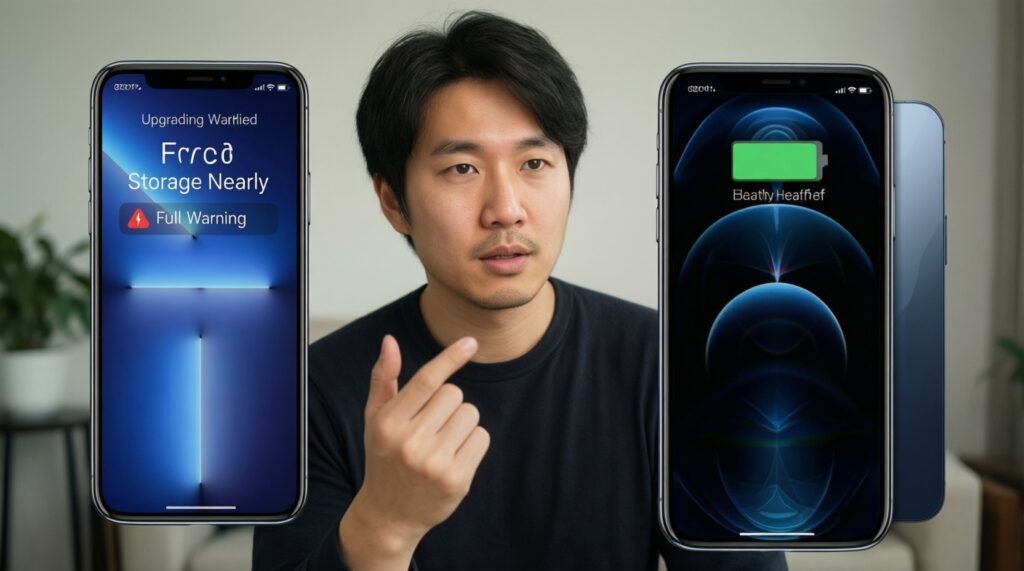
- Upgrading for performance when the real issue is nearly full storage (photos, caches, messaging media).
- Ignoring battery health and mistaking power-management slowdowns for "old CPU."
- Comparing only headline specs and missing usability features (display readability outdoors, modem stability, speaker/mic quality).
- Overpaying at launch prices instead of watching for official promos, carrier bundles, and last‑gen discounts in Thailand.
- Forgetting accessory and ecosystem costs (cases, screen protectors, cables, MagSafe ecosystem changes).
- Buying used without verifying activation lock status, repair history, and warranty/return terms.
- Delaying resale too long: the best time is often when your phone is still desirable and fully functional.
Practical Decision Guide: Who Should Upgrade or Wait
- Is your current phone failing you daily?
- Yes, performance/heat/camera limits work: go to step 2.
- No, it's mostly fine: skip to step 4.
- Is the pain battery-only?
- Yes: keep current + battery replacement.
- No: go to step 3.
- Do you need specific camera or heavy-workflow capability?
- Yes: newest iPhone (current generation).
- No: last‑gen iPhone (previous generation, discounted).
- Are you shopping mainly due to temptation or incremental features?
- Yes: wait for next generation, or buy last‑gen if a discount is compelling.
- No, budget is tight but you need a solid phone: two‑gen‑old refurb (with verified battery health and warranty).
The newest iPhone is best for users who can clearly benefit from top-tier camera/video, sustained performance, and maximum iOS feature runway. Last‑gen is best for most people asking "ซื้อ iPhone รุ่นไหนดี" because it balances capability and cost. Keeping your current phone with a battery replacement is best when you mainly need endurance. Waiting is best when your phone still works well and the upgrade is not tied to a real constraint.
Direct Answers to Upgrade Objections
Do I need the newest iPhone to feel a real difference?
No-many users feel the biggest difference from improved battery health or moving to a discounted last‑gen model. The newest matters most when your workload stresses the phone (camera/video, heavy apps, thermals).
How do I know if "อัปเกรด iPhone คุ้มไหม" for me?
It's worth it when you can name a daily problem the new phone solves and you'll use that benefit for at least a year. If your reasons are vague, waiting or last‑gen is usually safer.
Is comparing specs enough for "เปรียบเทียบ iPhone รุ่นใหม่ กับ รุ่นก่อน"?
No. Compare your bottlenecks (battery, camera mode, connectivity stability, storage) and test with your real apps; that reveals practical gains better than headline numbers.
What's the smartest approach to "ราคา iPhone รุ่นใหม่ เทียบ รุ่นก่อน"?
Compare total ownership cost: purchase minus expected resale, plus any accessories you must replace. Then map that cost to the single improvement you actually need.
Should I buy used to save money?
Only if you can verify battery health, warranty/return policy, and that the device is not activation-locked. If you can't verify, a discounted last‑gen new device is lower risk.
When is waiting the best choice?
When your phone is stable, still updated, and your upgrade reasons are "nice to have." Waiting also lets current models drop in price.