
If you're choosing between a current flagship smartphone chip and its previous generation, prioritize sustained thermals, battery behavior under peak power, and AI latency consistency-not the highest burst benchmark. For most buyers of a สมาร์ทโฟนชิปเรือธงรุ่นล่าสุด, the newer chip wins when the phone's cooling and firmware are mature; otherwise the older chip can feel steadier.
Executive snapshot: what the benchmarks reveal
- Peak benchmark scores usually reflect short bursts; sustained performance is dominated by heat dissipation and throttling policy.
- Battery life differences often come from peak power spikes (camera, gaming, on-device AI) rather than light use.
- AI performance matters most when models run repeatedly (translation, summarization, photo enhancement), where thermal saturation can erase paper gains.
- Chassis design (vapor chamber size, graphite layering, frame material) can flip which generation feels faster in real use.
- Firmware maturity (scheduler, modem tuning, NPU drivers) is a major variable early in a chip's lifecycle.
- For "best chip" shopping (มือถือชิปเรือธงแรงสุดปีนี้), evaluate the phone, not just the SoC name.
Thermal behavior under sustained load: lab measurements and real-world traces
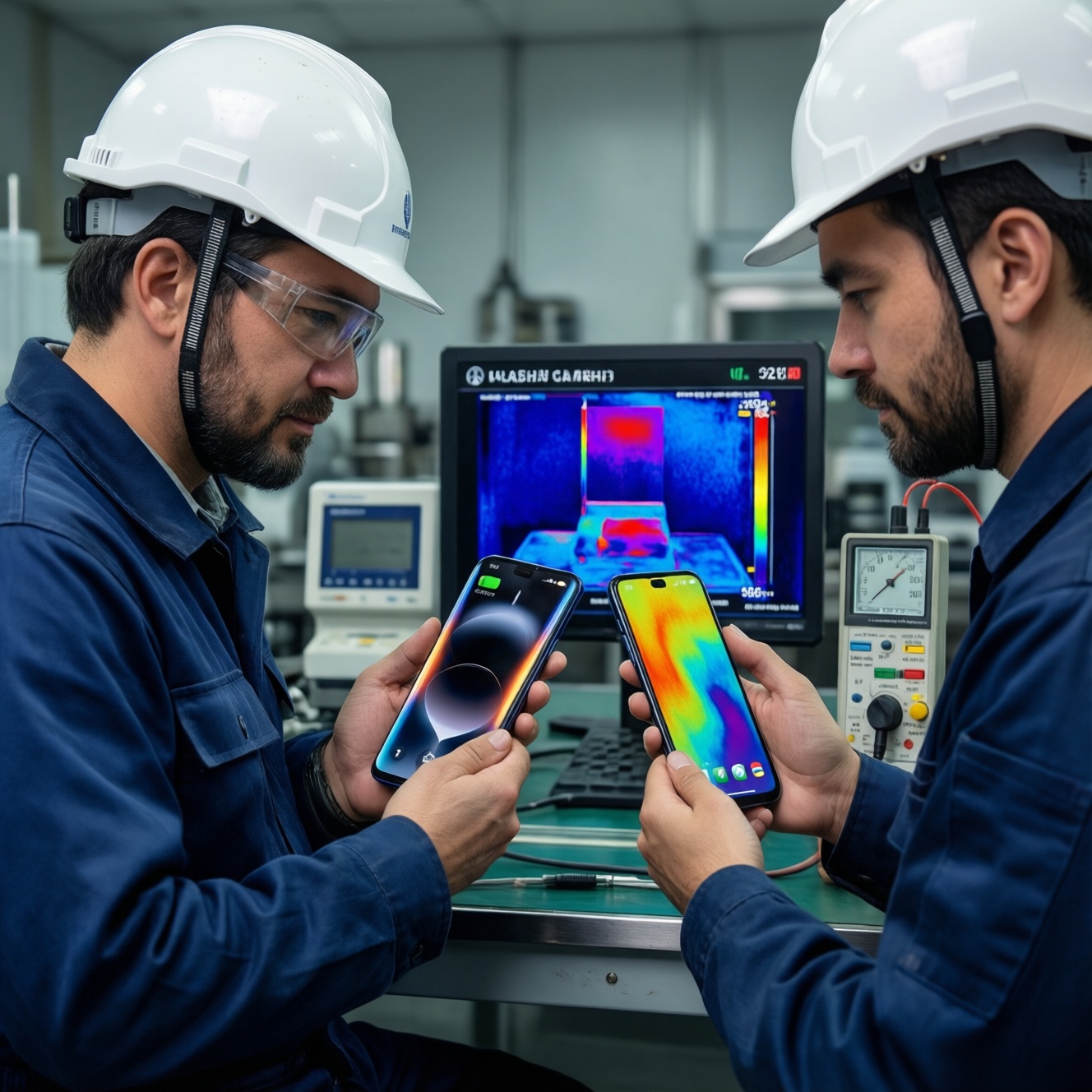
Use these criteria to decide when เปรียบเทียบชิปเรือธงรุ่นใหม่กับรุ่นก่อน based on heat and sustained speed (test over 15-30 minutes, screen on, similar brightness, same ambient):
- Time-to-throttle: How quickly performance steps down after the first few minutes of continuous load.
- Throttle smoothness: Gradual, predictable reductions feel better than abrupt drops and rebounds.
- Skin temperature comfort band: Aim for a device that stays comfortable to hold; treat sustained surface heat as a deal-breaker for gaming/camera sessions.
- Hotspot location: Heat near the camera island and upper frame impacts handheld comfort during filming.
- GPU sustained clocks: Look for stable frame pacing more than peak FPS.
- CPU sustained all-core behavior: Check whether multi-core tasks (exporting video, compiling) plateau early.
- Modem heat coupling: 5G + hotspot + navigation can heat-soak the chassis even without heavy CPU/GPU use.
- Thermal headroom while charging: Some phones throttle aggressively when plugged in (gaming/recording while charging).
Battery drain and charging: cycle, standby, and peak-power scenarios
Battery outcomes are most sensitive to peak-power bursts and how the phone caps them. Treat "newer gen = better battery" as conditional: it's true when the device controls spikes (camera + AI + modem) without runaway heat.
| Variant | Who it fits | Pros | Cons | When to choose |
|---|---|---|---|---|
| New-gen flagship chip in a large, actively-cooled design | Power user (gaming, long camera sessions) | Best chance of sustained performance; fewer abrupt drops under load | Bigger/heavier phones; cooling quality varies by brand | When you need stable FPS or long 4K/8K recording without "heat warnings" |
| New-gen flagship chip in a thin chassis | Style-focused user who still wants newest features | Fast bursts; often better short-task efficiency | More likely to throttle; can drain faster during camera/AI bursts | When your heavy tasks are brief (edits, quick exports) and comfort matters |
| Previous-gen flagship chip in a well-tuned "S" refresh phone | Value seeker, steady daily performance | Mature firmware; predictable thermals; stable battery patterns | Less headroom for next-gen AI features; shorter update runway depending on brand | When you want fewer surprises and consistent day-to-day endurance |
| New-gen chip with aggressive battery protection limits | IT manager / fleet owner (policy-driven devices) | Lower heat stress; better long-term consistency in managed profiles | Lower peak performance; charging speed may be constrained by policy | When reliability and predictable behavior beat top-end speed |
| Previous-gen chip paired with a larger battery and conservative charging | Travel-heavy user, field work | Long standby; cooler operation; often fewer thermal edge cases | Heavier devices; slower "wow" performance in short bursts | When you need endurance and stable navigation/hotspot use |
Quick chip-level comparison to guide shortlisting (qualitative, phone-dependent)
Use this as a decision frame before you narrow down to specific models (cooling and firmware can override the chip's theoretical advantage). For buyers looking at มือถือชิป Snapdragon 8 Gen ล่าสุด or มือถือชิป Dimensity 9xxx รุ่นล่าสุด, treat these as "what to validate on the actual phone."
| Dimension (test focus) | Latest-gen flagship chip (typical expectation) | Previous-gen flagship chip (typical expectation) | What to verify on the phone |
|---|---|---|---|
| Sustained thermals (20-30 min load) | Can be better if cooling is robust; can be worse if tuned for peak bursts | Often steadier due to mature tuning and known thermal envelopes | Frame pacing stability; absence of sharp throttle oscillations; comfortable surface temperature |
| Battery under peak power (camera, gaming, AI bursts) | Potentially improved efficiency, but spikes can be higher | Often predictable; may draw less peak power in some workloads | Battery drop during 10-15 min camera + AI processing; heat while on 5G |
| On-device AI responsiveness (repeated inference) | Higher throughput potential; better support for newer model ops in some stacks | Good for lighter models; may slow sooner if workloads are heavy but can remain consistent | Latency consistency after 5-10 minutes of repeated tasks; whether the device shifts work to cloud |
AI workload performance: latency, throughput, and on-device inference quality
Pick based on your AI usage pattern, not just "AI TOPS" claims. Practical rules by persona:
- If you're a developer and you run repeated local inference (test loops, on-device evaluation), choose the chip/phone that holds latency steady after heat soak; if the newest gen throttles early on your target device, the previous gen may deliver more predictable iteration time.
- If you're a power user doing camera AI (denoise, HDR stacking, portrait segmentation), choose the device that completes back-to-back processing without getting hot enough to reduce capture speed; if you see "processing slowdown" after several shots, sustained thermal design matters more than the chip generation.
- If you're an IT manager deploying on-device transcription/translation, choose the platform with stable performance in background + screen-off modes; if the newest gen is aggressive about background limits, perceived AI speed can drop due to scheduling, not compute.
- If you rely on privacy-sensitive workflows (offline summarization, local document parsing), choose the newest gen only if your apps use its NPU path; if apps fall back to CPU, the advantage can shrink and heat rises.
Synthetic benchmarks vs application-level tests: where numbers diverge
- Define your top 2 workloads (e.g., 30-minute gaming, 20-minute 4K recording, offline translation sessions), not a generic "fast."
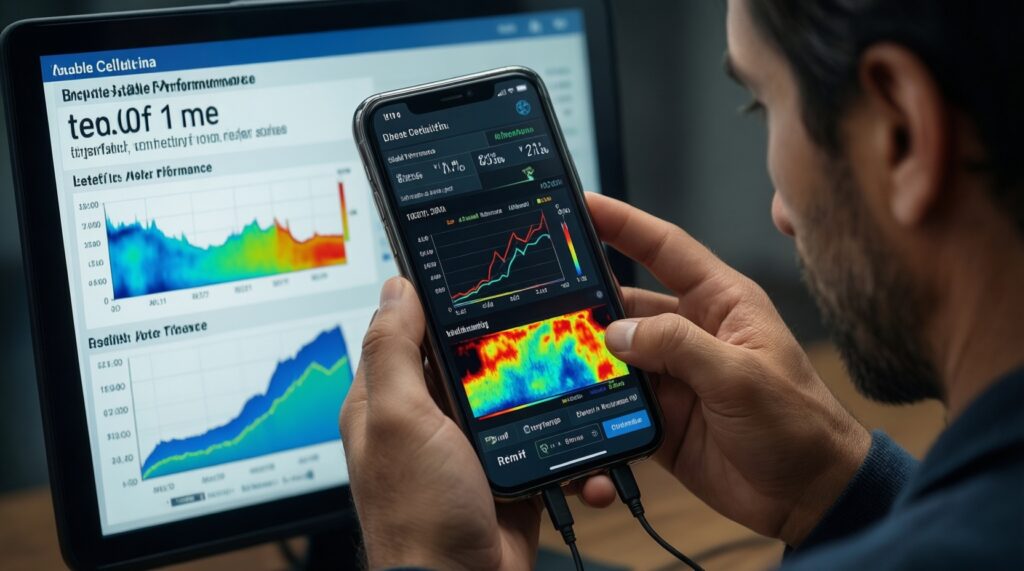
- Run/inspect sustained tests (10-30 minutes) and look for stability (flat-ish performance) rather than the first run's score.
- Check thermal behavior while on 5G if you travel or hotspot; modem heat can dominate in real use.
- Compare battery drop during peak tasks (camera + AI, gaming + voice chat) because that's where generations differ most.
- Validate app path for AI: confirm the app uses NPU/GPU acceleration on your device; otherwise "AI chip gains" won't show.
- Prefer device-level reviews of the exact model (cooling, firmware) over chip-only charts when finalizing the buy.
Cooling solutions and chassis influence: design factors that change outcomes
- Assuming the newest chip automatically runs cooler; a thin chassis can negate efficiency gains.
- Overweighting a single benchmark run (cold start) instead of sustained runs (heat-soaked state).
- Ignoring frame pacing: average FPS can look fine while gameplay feels uneven due to thermal oscillation.
- Not checking performance while charging; some phones enforce strict thermal caps that cut speed hard.
- Equating "bigger vapor chamber" with better results; implementation and contact quality matter.
- Missing modem-driven heat: navigation + 5G + camera is a common worst case.
- Relying on AI spec numbers without verifying app support for the NPU stack on that device.
- Testing at unrealistic brightness/conditions; higher brightness and warm ambient reduce headroom dramatically.
Interpreting long-term reliability: throttling patterns and aging indicators

For developers and power users who sustain heavy loads, the better choice is usually the newer chip in a phone with proven cooling and stable firmware, because it's more likely to maintain usable performance over time. For IT managers and buyers prioritizing predictability, a well-tuned previous-gen device can be the better pick when it shows smoother throttling and lower heat stress in your daily workload.
Practical clarifications and deployment considerations
Is the latest flagship chip always faster in real apps?
No. Short bursts are often faster, but sustained tasks depend on cooling, firmware tuning, and whether the phone throttles smoothly.
What should I test first to decide between generations?
Run a 15-30 minute sustained workload you actually do (gaming, camera, navigation + 5G), then compare stability, heat, and battery drop rather than peak scores.
How do I judge AI performance without specialized tools?
Repeat the same on-device AI task several times (photo enhancement, transcription) and watch for slowdowns after the phone warms up.
Does more RAM change the chip comparison?
It can change perceived speed by reducing reloads and background kills, but it doesn't fix thermal throttling; treat it as a separate requirement.
For mobile gaming, what matters more than the chip name?
Frame pacing under sustained load and surface temperature comfort matter more. A well-cooled previous-gen phone can feel better than a throttling new-gen one.
For corporate deployment, which generation is safer?

Choose the platform that is already stable on your required apps and policies. Mature firmware and consistent thermals typically reduce support incidents.
Can I compare Snapdragon vs Dimensity using the same checklist?
Yes. Use the same sustained, battery, and AI-repeatability checks; differences often come from device cooling, modem behavior, and software stack maturity.