
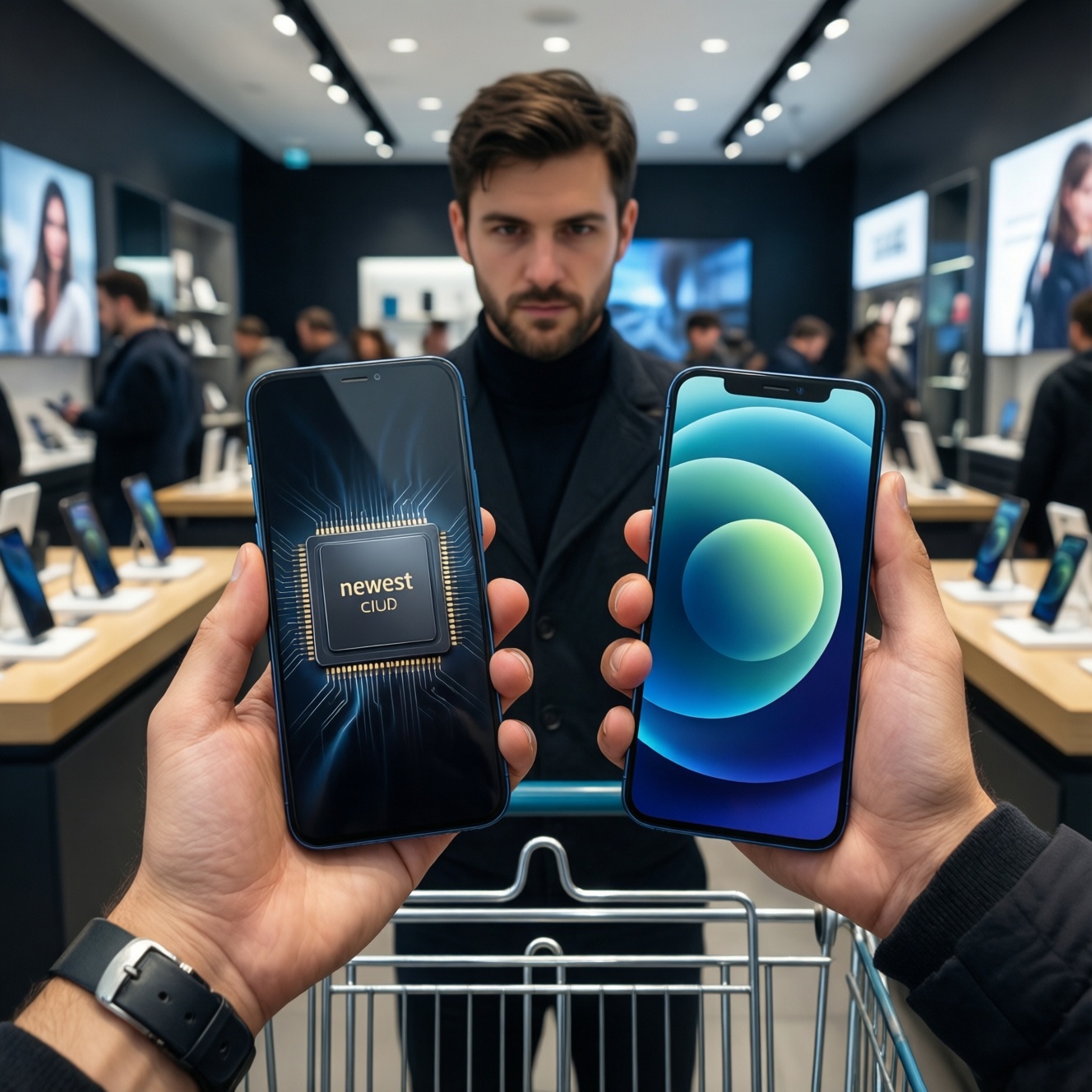
If you want the best "overall" experience, the new iPhone chip is usually the right pick for heavier apps, longer software runway, and better sustained performance. If you mainly do messaging, social, and light photos, the previous-generation chip can feel nearly identical day-to-day while costing less and often running cooler under short bursts.
At-a-Glance Technical Summary
- For เปรียบเทียบชิป iPhone รุ่นใหม่กับรุ่นก่อน, focus on sustained performance, not just peak speed.
- iPhone รุ่นใหม่ แรงกว่าเดิมไหม: typically yes in CPU/GPU headroom, most noticeable in gaming, video, and on-device AI features.
- รีวิวประสิทธิภาพชิป iPhone รุ่นล่าสุด should be read alongside throttling behavior; a "faster" chip can feel similar if it downclocks quickly.
- iPhone รุ่นใหม่ แบตเตอรี่ดีขึ้นไหม depends on workload: efficiency gains show up most in mixed use and background tasks, less in constant high-GPU loads.
- iPhone รุ่นใหม่ ร้อนไหม ปัญหาความร้อน is usually workload- and chassis-dependent; thermals are a system result (chip + cooling + modem + screen).
What Changed in the New iPhone Chip: Architecture and Fabrication
Use these criteria to decide which generation fits you best (intermediate-friendly, practical signals rather than marketing labels):
- CPU core balance: more performance cores help bursty heavy tasks; more efficient cores help background work and standby.
- GPU design and bandwidth: matters for high-FPS gaming, HDR processing, and video effects; bandwidth often limits sustained graphics.
- Neural/ML accelerator capability: impacts on-device transcription, photo cleanup, and app features that run locally (when supported).
- Process node and leakage behavior: newer fabrication can reduce wasted power, especially at low-to-mid loads.
- Thermal envelope of the phone model: Pro vs non‑Pro chassis/cooling changes real performance more than small spec deltas.
- Modem and connectivity power draw: weak signal + 5G can dominate battery/heat regardless of chip generation.
- Memory subsystem: memory bandwidth/latency influences multitasking, camera pipeline, and heavy app switching.
- Software support horizon: newer chips typically receive longer feature support and compatibility with future iOS capabilities.
CPU and GPU Performance: Benchmarks and Real-World Tasks
Below is a practical comparison framing. Since results vary by phone model, iOS version, thermal state, and app versions, treat "benchmarks" as relative signals: peak (short test) vs sustained (long loop). Use it to choose the best option for your workload, not to chase a single score.
| Variant | Who it fits | Pros | Cons | When to choose |
|---|---|---|---|---|
| Latest-generation iPhone chip (current lineup) | Power users, creators, mobile gamers | Best peak CPU/GPU headroom; typically stronger ML acceleration; better long-term iOS feature compatibility | Can run warmer in long high-load sessions depending on chassis; diminishing returns for light use | If you export video, play sustained 3D games, use Pro camera workflows, or keep phones for years |
| Previous-generation flagship chip (last year's top) | Most intermediate users | Excellent real-world speed; often very stable thermals; strong value in discounted models | Less headroom for future heavy features; may throttle earlier than the newest under the same loop | If you want near-flagship feel for less money and don't live in long gaming/render sessions |
| Two-generations-old flagship chip | Commuters, casual shooters, social-first usage | Still fast for UI, messaging, and standard photos; typically cooler in short tasks | Heavier apps age faster; lower sustained GPU; more likely to hit limits in demanding camera/video modes | If your workload is light-to-mixed and you upgrade more frequently or buy refurbished |
| Latest chip in non‑Pro chassis (same gen, different cooling/battery) | Everyday users who want the newest platform | Newest CPU features and iOS support; great burst performance for camera and app launches | Sustained performance can be constrained by thermals; gaming loops may downclock sooner | If you want the newest chip benefits but don't need long high-FPS sessions |
| Previous-gen Pro model (chip + stronger cooling + often more RAM tiering) | Developers, multitaskers, camera-heavy users on a budget | More consistent sustained workloads; better for long camera sessions and editing than same-gen non‑Pro | Not the newest ML/feature set; still behind newest gen in peak efficiency/accelerators | If you care about steadier performance under load more than having the newest silicon |
Battery Efficiency: Measured Runtime and Charging Behavior
Use scenario logic rather than expecting one chip to "always" win. Chip efficiency interacts with screen brightness, radios, and your app mix.
- If you do lots of short sessions (chat, maps, payments) with long idle gaps, then the newer chip's efficiency cores and platform tuning usually translate to better end-of-day battery consistency.
- If you shoot many photos/videos back-to-back, then prioritize the newest generation or a Pro chassis (better sustained camera pipeline) because heat spikes can increase drain on older platforms.
- If you game for long stretches on cellular, then battery will be dominated by GPU load + modem conditions; choose the model that stays coolest (often Pro cooling or capped FPS), not just the newest chip.
- If you are often in weak-signal areas (BTS/MRT tunnels, elevators, rural travel), then consider that modem power can outweigh chip gains; choose the newest platform if it also brings radio-side efficiency improvements in that model generation.
- If you rely on fast top-ups, then focus on charging curve behavior (heat-limited charging slows down); a cooler-running configuration can "feel" faster to recharge in real life.
Thermal Characteristics: Heat, Throttling, and Sustained Performance
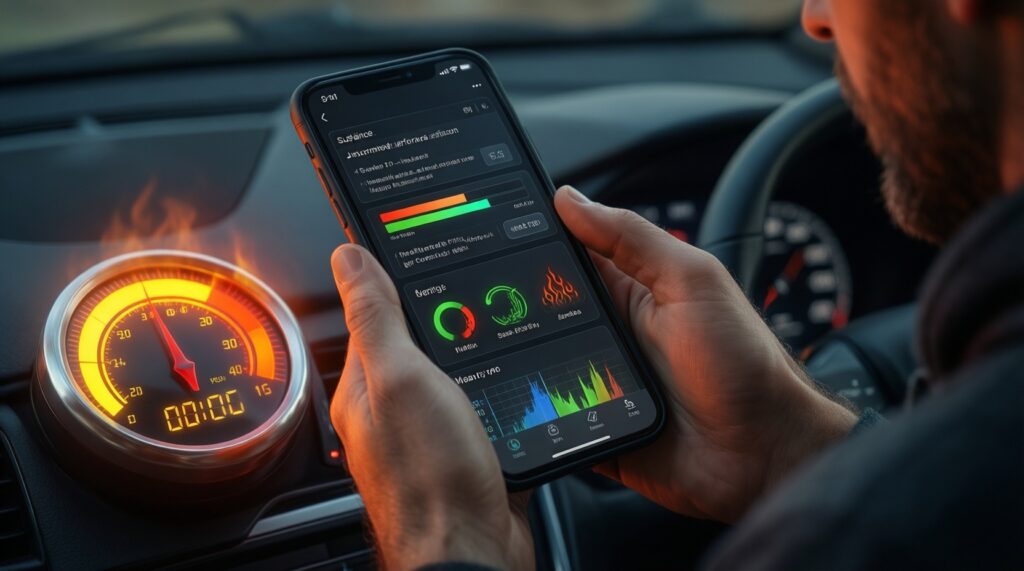
- List your top 2 heat-producing tasks (e.g., 3D gaming, 4K video, hotspot, navigation on 5G).
- Decide whether you need 10-30 minutes sustained performance (gaming loops, exports) or mainly bursty speed (camera launch, filters, app switching).
- If sustained matters, prioritize: newest chip in best-cooled chassis or previous-gen Pro over newest non‑Pro.
- If bursts matter, prioritize: newest chip even in non‑Pro; you'll feel the responsiveness without living in throttling zones.
- Check your environment: if you often use the phone in hot outdoor Thai weather, weight cooling higher than small benchmark deltas.
- Control your settings: cap FPS in games, avoid max brightness for long sessions, and update apps-these often reduce heat more than a one-generation chip change.
Persona-Based Comparisons: Power User, Commuter, and Developer Scenarios
Common selection mistakes (and what to do instead) mapped to typical personas:
- Power user mistake: buying on peak benchmark headlines while ignoring sustained throttling. Fix: choose the configuration that holds performance in long loops (often Pro chassis or newest gen + better cooling).
- Power user mistake: assuming "newest chip" automatically means "cooler." Fix: evaluate your longest workload (gaming/export) and pick based on heat stability, not just generation.
- Commuter mistake: upgrading only for speed when your pain point is battery on cellular. Fix: prioritize model-level radio/battery behavior; chip gains alone won't solve weak-signal drain.
- Commuter mistake: testing battery at home Wi‑Fi and expecting the same on BTS/MRT. Fix: compare under the same network conditions and navigation usage.
- Developer mistake: underestimating RAM/memory subsystem and focusing only on CPU. Fix: if your workflow includes builds, device debugging, or many apps, choose a Pro-tier configuration even if it's one generation older.
- Developer mistake: buying two-generations-old to save money, then hitting feature/tooling limits earlier. Fix: if you keep phones 3+ years, newer silicon usually reduces friction with future iOS and on-device ML features.
- All personas mistake: blaming the chip for heat when it's brightness + 5G + background sync. Fix: measure: repeat the same task at 60% brightness on Wi‑Fi vs 5G to isolate the cause.
Upgrade Decision Guide: When the New Chip Is Worth It

Best fit for power users and creators: the latest-generation chip, ideally in the best-cooled model you can justify, because sustained workloads expose real differences. Best fit for value-focused intermediate users: the previous-generation flagship (often discounted) since daily responsiveness stays high. Best fit for commuters and light users: two-generations-old can be enough if you accept faster aging in heavy apps and camera/video modes.
Answers to Common Practical Concerns
Is the new iPhone chip noticeably faster in daily use?
For messaging, social, and UI navigation, the difference is often subtle. You'll notice it more in heavy multitasking, big photo libraries, demanding games, and video exports.
How should I read benchmark charts when comparing generations?
Prefer sustained tests (long loops) over short peaks. If a chip drops performance quickly due to heat, peak numbers won't match what you feel after several minutes.
Does a newer chip automatically mean better battery life?
Not automatically. Mixed use often improves, but long gaming, max brightness, and weak 5G signal can dominate power draw regardless of chip generation.
Why does my phone feel hot even if the chip is "more efficient"?
Heat is system-wide: modem, display brightness, ambient temperature, and background processes matter. Efficiency gains can be offset by heavier workloads or hotter environments.
Should I pick newest non‑Pro or last-year Pro for performance?
If you care about sustained performance (gaming loops, recording/editing), last-year Pro can be the steadier choice. If you want the newest platform features and burst speed, newest non‑Pro is often enough.
What's the safest choice if I keep my iPhone for several years?
The newest chip generation is typically the safer bet for future iOS features and app compatibility. It reduces the chance you'll hit performance or feature ceilings sooner.